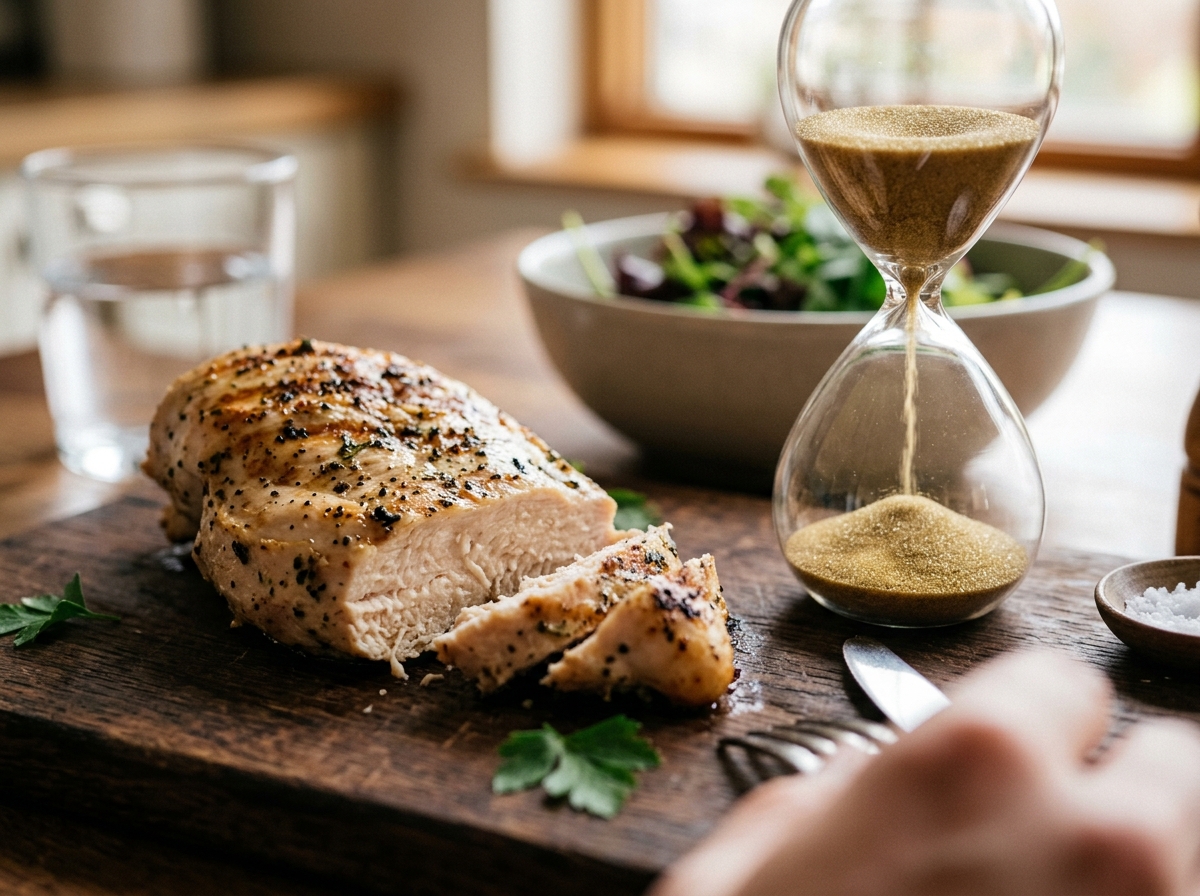
A plain chicken meal usually starts to clear your stomach in about 2 to 3 hours. Most of the real breakdown and absorption happens over the next several hours in your small intestine. The entire meal, from your plate to the time waste leaves your body, can take 1 to 3 days, and sometimes longer.
That’s the clean answer.
But your body doesn’t treat all chicken meals the same. A grilled chicken breast and a big fried chicken combo are not even close. Portion size, fat, fiber, sauces, your gut health, and even medicines you take can change the timing.
The short answer: how long does it take to digest chicken?
Think of digestion like a relay race, not a single moment.
Your stomach starts the process. Your small intestine does most of the real digestion and absorption. Your colon handles what’s left, plus water and waste. So when people ask how long chicken takes to digest, they usually mean one of three things:
- How long chicken stays in the stomach
- How long until nutrients are absorbed
- How long until the meal leaves the body
Those are different clocks.
Quick facts
- Lean chicken breast: often around 2 to 3 hours in the stomach as part of a light meal
- Larger mixed chicken meal: often 3 to 4 hours or more
- Fried or skin-on chicken: often longer because fat slows stomach emptying
- Whole-gut transit: often 24 to 72 hours, sometimes more
Here’s a simple way to look at it:
| Chicken meal | Time in stomach | Most digestion/absorption | Full trip through body |
|---|---|---|---|
| Small grilled chicken breast | About 2–3 hours | About 4–6 hours | 24–72 hours |
| Chicken with rice and vegetables | About 3–4 hours | About 5–7 hours | 24–72 hours |
| Chicken thigh with skin or creamy curry | About 4 hours or more | About 6–8 hours | 1–3 days or longer |
| Fried chicken meal with sides | About 4–6 hours or more | Longer than a lean meal | 1–3 days or longer |
These are estimates, not stopwatch numbers. Doctors and gastroenterology sources usually talk about gastric emptying and whole-gut transit, not a single exact “chicken digestion time.”
Why the time changes so much
Chicken itself is mostly protein, with more or less fat depending on the cut and cooking style. Protein takes more work than a simple carb like fruit juice. Fat slows things down even more.
So yes, chicken can digest fairly well for many people, but a heavy chicken meal can still sit in your stomach long enough to make you feel stuffed, sleepy, or bloated.
Did you know? The heavy feeling after a meal doesn’t always mean digestion has “stopped.” Often, it just means your stomach is still emptying at its normal pace.
What “digesting chicken” really means
A lot of articles blur this part, and that’s where the confusion starts.
Your stomach doesn’t do the whole job
Once you chew and swallow chicken, your stomach mixes it with acid and pepsin, an enzyme that starts breaking down protein. Your stomach turns that food into a soft, soupy mix before sending small amounts into the small intestine.
That takes time. Solid food doesn’t leave the stomach all at once.
If you ate a simple meal like grilled chicken breast with a little rice, your stomach may handle it pretty smoothly. If you had fried chicken, creamy sauce, or a huge plate, the stomach works longer because fatty meals empty more slowly.
The small intestine does most of the real work
Your pancreas sends enzymes that break protein into smaller pieces. Your small intestine then absorbs those pieces as amino acids, which your body uses to repair tissue, build muscle, and support hormones and immune function.
If your meal has a lot of fat, bile from the liver and gallbladder also joins the process. That’s another reason greasy chicken meals often feel heavier.
For most healthy adults, this stage happens over the next several hours. So if you want the best plain-English answer, most of the chicken’s nutrients are digested and absorbed within about 4 to 6 hours after a simple meal, and longer after a heavy one.
Common confusion: digestion isn’t the same as pooping
This is the part people mix up all the time.
You can digest and absorb chicken long before the full meal leaves your body. Waste still has to move through the colon, where water gets absorbed and stool forms.
So if you eat chicken at lunch and don’t have a bowel movement until the next day, that doesn’t mean the chicken stayed untouched in your stomach all night. It just means your digestive tract is doing its full job.
What changes how long chicken takes to digest
No two chicken meals are equal. Even the same person can digest the same food differently from one day to the next.
Lean breast vs thighs, wings, or skin-on pieces
A skinless chicken breast is usually easier and faster to digest than a thigh, wing, or skin-on piece. Why? Mostly because of fat content.
Lean protein tends to move through the stomach faster than a fatty meal. That’s why grilled breast often feels lighter than crispy wings.
Dark meat isn’t “bad.” It just tends to be richer. If your stomach feels heavy after chicken, the cut may matter more than you think.
Grilled, baked, shredded, or fried
Cooking style changes digestion time too.
Grilled, baked, poached, or boiled chicken usually feels easier on the stomach, especially if it isn’t drenched in oil or cream. Fried chicken takes longer because you’re not just digesting protein anymore. You’re also digesting breading, added fat, and often a bigger total meal.
Texture matters a bit as well. Soft, well-cooked chicken that you chew properly is easier for your gut to handle than very dry, tough pieces you swallow too fast.
Portion size and what you eat with it
A 3-ounce serving of cooked chicken, which is around a standard portion by USDA-style serving size, is very different from an oversized restaurant plate.
The bigger the meal, the longer your stomach needs.
Sides matter too:
- Rice, potatoes, or bread can make the meal larger but may still feel fine if fat is low
- Vegetables add fiber, which helps bowel health but may also slow the full meal a bit
- Cheese, creamy sauces, butter, and fries usually make the meal feel heavier
- Spicy add-ons may irritate some stomachs, even if they don’t always slow digestion itself
A simple example helps.
A grilled chicken breast with white rice and cooked zucchini will often feel much lighter than fried chicken with fries, cola, and ranch dip. Same protein source. Very different digestion experience.
Your body and your medicines matter too
Your gut isn’t a machine with one fixed speed.
Chicken may digest more slowly if you:
- eat very fast
- lie down right after eating
- are under stress
- are dehydrated
- have constipation
- have conditions like GERD, gastroparesis, gallbladder problems, or pancreatic issues
Some medicines can slow digestion as well. That includes opioids and newer GLP-1 medicines such as semaglutide and tirzepatide, which are commonly used for diabetes and weight loss. These medicines can slow stomach emptying, so meals may sit longer and feel heavier.
If that sounds like your situation, the timing in this article may not match your body exactly.
Is chicken hard to digest?
For many people, plain cooked chicken is not hard to digest. In fact, it’s often one of the easier animal proteins because it’s lower in fat than many cuts of beef and doesn’t contain fiber or lactose.
Still, “easy to digest” doesn’t mean “digests instantly.”
Why chicken feels easy for some people
Chicken is often used in gentle meals for a reason. It’s:
- rich in protein
- naturally low in carbs
- often lower in fat, especially breast meat
- low FODMAP on its own, which matters for some people with IBS-like symptoms
That’s why many people tolerate plain chicken soup, boiled chicken, or grilled chicken better than greasy fast food.
Why you may feel heavy, bloated, or sleepy after chicken
If chicken makes you uncomfortable, the chicken itself may not be the whole story.
A few common reasons:
You ate a lot.
Big meals stretch the stomach more and take longer to empty.
The meal was high in fat.
Skin, butter, cream sauce, deep frying, and rich sides can slow stomach emptying.
You ate too fast.
Less chewing means your stomach has more work to do.
The sides were the trigger.
Onions, garlic, beans, carbonated drinks, and heavy sauces can cause gas or bloating even if the chicken is fine.
You lay down too soon.
That can worsen reflux or a heavy feeling, especially at night.
A lot of people say, “Chicken makes me bloat,” but if you look closely, it’s often the full meal: spicy marinade, greasy coating, giant portion, soda, dessert, and eating late.
What about chicken allergy or intolerance?
A true chicken allergy is possible, but it’s not common. Allergy symptoms can include itching, hives, swelling, wheezing, or stomach upset soon after eating.
That’s different from ordinary slow digestion.
There isn’t a well-defined, common “chicken intolerance” the way people talk about lactose intolerance. More often, people react to the seasoning, the oil, the breading, or the size of the meal.
If plain baked chicken bothers you every single time, it’s worth talking to a doctor or a registered dietitian.
How to make chicken easier on your stomach
You can’t force your body to digest a meal at double speed. But you can make digestion feel smoother.
Simple habits that help
Pro tip: Think “lighter, smaller, slower.”
Here are a few things that usually help:
- Choose grilled, baked, poached, or boiled chicken more often than fried
- Start with a moderate portion instead of a giant plate
- Chew well and eat at a calm pace
- Pair chicken with easy sides like rice, potatoes, oats, or cooked vegetables
- Go easy on very fatty sauces if heavy meals bother you
- Take a short walk after eating instead of lying flat right away
That short walk won’t magically “burn off” the meal, but it can help you feel less sluggish.
Best meal examples for easier digestion
If your stomach gets touchy, compare these two dinners.
Easier option:
Grilled chicken breast, white rice, cooked carrots, and water.
Heavier option:
Fried chicken, fries, creamy dip, soda, and dessert.
Your gut has a lot more to manage in the second meal. More fat. More volume. More sugar. More carbonation. Same chicken, very different outcome.
What if you’re eating before bed or before exercise?
Timing matters in real life.
If you’re eating before bed, a lighter chicken meal is usually the better choice. A giant fried meal late at night is more likely to leave you feeling full, refluxy, or restless.
If you’re eating before a workout, give yourself more time after a larger chicken meal. Many people do better with:
- 1.5 to 2 hours after a light chicken snack or small wrap
- 2 to 4 hours after a larger chicken meal
Your body will tell you pretty quickly if that window is too short.
When slow digestion may be a medical issue
Most of the time, a heavy feeling after chicken is just a meal-size or meal-style issue. But sometimes your body is trying to tell you more.
Signs you shouldn’t ignore
Call a doctor if you often have:
- severe belly pain after eating
- vomiting that keeps happening
- trouble swallowing
- early fullness after just a few bites
- black stools or blood in the stool
- unexplained weight loss
- ongoing bloating, reflux, or nausea that keeps coming back
Food shouldn’t sit in a healthy stomach for days. If it feels like that’s happening often, get checked.
Warning: This article is for general education only. It doesn’t replace medical advice, diagnosis, or treatment.
A quick note about undercooked chicken
Sometimes people think, “Maybe I just digest chicken slowly,” when the real problem is food poisoning.
Undercooked or contaminated chicken can cause symptoms like cramps, diarrhea, fever, nausea, or vomiting. Those symptoms may start hours later or even a few days later, depending on the germ involved, such as Salmonella or Campylobacter.
That’s not slow digestion. That’s a possible infection.
If you get strong symptoms after chicken, especially fever or diarrhea, think safety, not just digestion speed.
- FAQ Section
FAQ
How long does chicken stay in your stomach?
A light chicken meal often stays in the stomach for about 2 to 3 hours. A larger or fattier meal, like fried chicken, may stay there 4 hours or longer. Your exact timing depends on meal size, fat content, and your own digestion.
Does fried chicken take longer to digest than grilled chicken?
Yes, it often does. Fried chicken usually takes longer because fat and breading slow stomach emptying. A plain grilled chicken breast is usually easier and faster for the stomach to handle.
Is chicken easier to digest than beef?
For many people, lean chicken is easier to digest than fatty beef because it usually has less fat and less connective tissue. Still, the cooking method and portion size matter a lot. A greasy chicken meal can feel heavier than a small lean beef dish.
Why do I feel bloated after eating chicken?
Bloating after chicken is often caused by the full meal, not the chicken alone. Common triggers include rich sauces, fried coating, onions, garlic, soda, eating too fast, or eating too much at once. If plain chicken causes the same problem every time, talk with a healthcare professional.
Can chicken take days to digest?
The chicken itself usually doesn’t stay untouched in your stomach for days. Most digestion and absorption happen within several hours. But the entire meal can take 1 to 3 days to move through your digestive tract and leave your body.
Can I speed up chicken digestion?
You can’t force rapid digestion, but you can make meals easier on your gut. Try smaller portions, lower-fat cooking methods, chewing well, drinking enough water, and taking a short walk after eating. If slow digestion happens often, look at medicines, stress, and any digestive conditions too.
- Conclusion
So, how long does it take to digest chicken? For most people, a simple chicken meal is largely processed within a few hours, while the full journey through the body takes a day or more. If chicken keeps making you feel heavy, don’t just blame the protein. Look at the cut, the cooking method, the portion, the sides, and how your own gut responds. Your best next step is simple: notice which chicken meals leave you feeling good, and build from there.
If you want, I can also turn this into a fully SEO-optimized blog post with meta title, meta description, slug, and FAQ schema markup.