You’ve set the water boiling, dropped the potatoes in, and now you’re just… guessing. Ten minutes? Twenty? Thirty? And somehow they still come out either chalky in the middle or falling apart before you even drain them.
Here’s the honest answer: most potatoes take 12 to 25 minutes to boil, depending on their size and how you’ve cut them. But that range exists for a reason — and once you understand what’s actually driving the timing, you’ll never overcook or undercook them again.
How Long Does It Take to Boil Potatoes on the Stove?
Let’s start with the numbers you actually came here for.
The timings below are measured from when the water reaches a gentle boil, not from when you turn the stove on. Cold water heating up can take 8–12 extra minutes depending on your stove and pot size, so keep that in mind for total planning.
| Potato Type / Size | Boil Time (after simmer starts) | Approx. Total Time |
|---|---|---|
| 1-inch cubed potatoes | 12–15 min | 20–25 min |
| 2-inch chunks | 15–20 min | 25–30 min |
| Baby potatoes, whole | 12–18 min | 20–28 min |
| Small red or Yukon Gold, whole | 15–20 min | 25–30 min |
| Medium potatoes, whole | 20–25 min | 30–35 min |
| Large russet potatoes, whole | 25–35 min | 35–45 min |
Most articles throw out a single number — “boil for 20 minutes” — and call it a day. But a 1-inch cube and a large whole russet are not the same thing. Treating them like they are is exactly why potatoes disappoint you at the dinner table.
Quick Fact: Size is the single biggest driver of boil time. Whether the skin is on or off? That barely moves the needle.
What Actually Changes How Long Potatoes Take to Boil?
This is where most people get tripped up. Four things genuinely affect your boiling time, and ignoring even one of them can throw off your whole dish.
Size Is Everything
Cut a pot of potatoes with some pieces at 1 inch and others at 3 inches, and here’s what happens: the small ones go mushy while the large ones are still firm in the middle. You end up draining them at a point where nothing is quite right.
The fix is simple — cut your potatoes into roughly even-sized pieces. You don’t need a ruler. Just eyeball it and stay consistent. If you’re boiling whole potatoes, try to pick ones that are similar in size from the same batch.
The Type of Potato Matters More Than You Think
Not all potatoes behave the same in boiling water, and this changes both your cooking time and your end result.
Russet potatoes are high in starch. They become fluffy and soft quickly, which makes them ideal for mashing. But they also fall apart faster if you push past done — so watch them closely.
Yukon Gold potatoes sit in the middle. They have a naturally creamy, buttery texture and hold their shape reasonably well. They work for mashing, boiling whole, and salads.
Red potatoes and baby potatoes are waxy. They hold their shape far better under heat, which is why they’re the go-to for potato salad, soups, and dishes where you want the potato to stay intact.
Whole, Halved, or Cubed?
The more surface area exposed to the boiling water, the faster heat gets in. Cubed potatoes cook the fastest. Whole potatoes take the longest. That’s it.
If speed matters, cut them. If shape retention matters — like for a salad where you want clean slices — keep them whole or in large halves and just plan for extra time.
Altitude and Pot Size Play a Small Role
At higher altitudes, water boils at a lower temperature. This means your potatoes take slightly longer to reach the same softness. If you live above 3,500 feet, add a few extra minutes to your estimated time and rely more on the fork test than the clock.
A very large pot filled with a lot of cold water also takes longer to come to a boil, which extends your total cooking time even if the actual simmer time stays the same.
The Right Way to Boil Potatoes on the Stove
Good boiling isn’t just about setting a timer. The method shapes the result just as much as the timing does.
Step 1: Wash your potatoes well. Peel them if your recipe calls for it, or leave the skin on — skin-on potatoes hold their shape a little better.
Step 2: Cut them into even-sized pieces, or leave them whole if that’s what you need.
Step 3: Place the potatoes in a pot and cover with cold water — about 1 inch above the potatoes.
Step 4: Add a generous pinch of salt to the water. The water should taste lightly seasoned, not like the ocean. This seasons the potato from the inside as it cooks.
Step 5: Bring to a boil over medium-high heat.
Step 6: Once boiling, reduce heat slightly to maintain a gentle, steady simmer. Not a rolling storm — just a calm, consistent bubble.
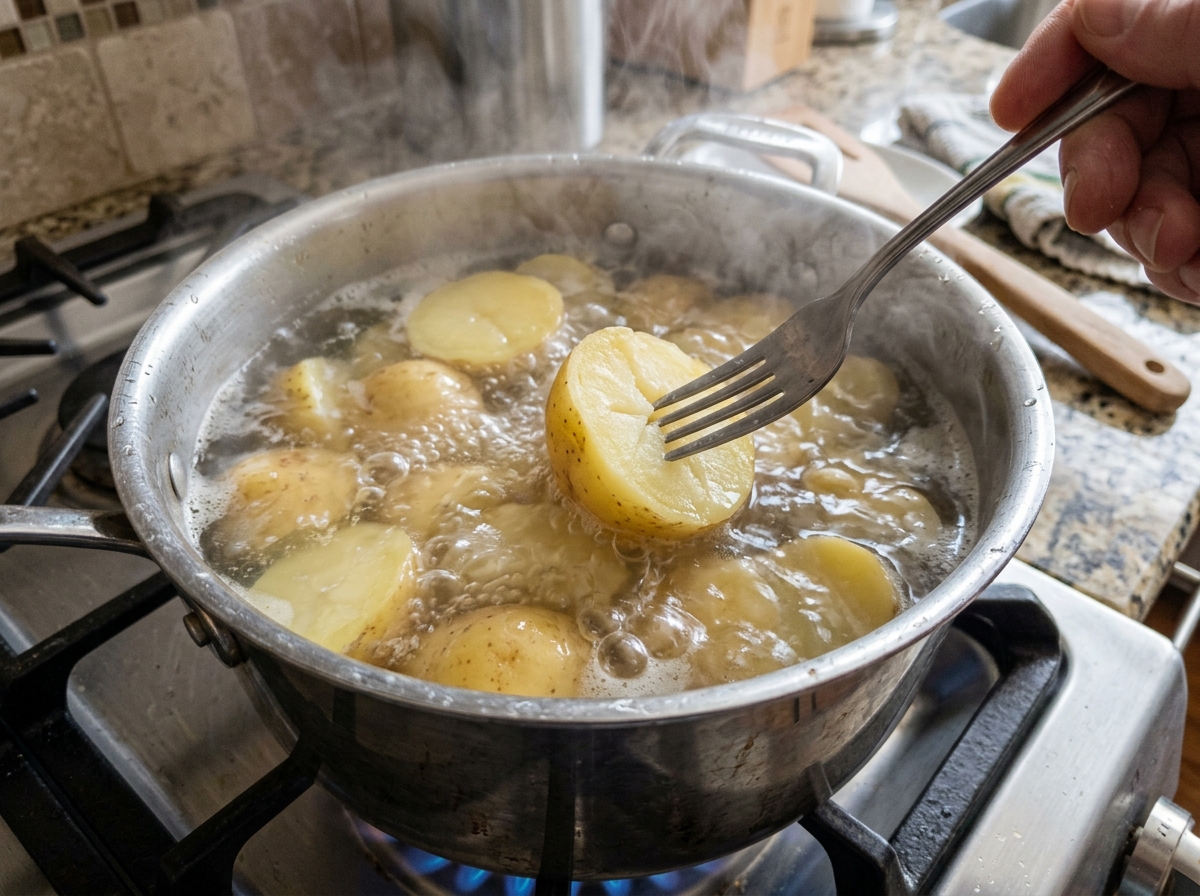
Step 7: Start checking with a fork a few minutes before your expected time. Don’t wait for the timer to go off and then check — check early, check often toward the end.
Step 8: Drain immediately when done. Don’t leave them sitting in hot water.
Why Cold Water Start Is Non-Negotiable
Dropping potatoes into already-boiling water sounds like a time-saver. It’s not — at least not in the way that matters.
When you start in cold water, the potato heats up gradually and cooks evenly from outside to inside. Drop them into boiling water, and the outside gets hit with intense heat immediately while the center is still trying to catch up. You end up with edges that are soft and a middle that’s still chalky — especially in larger pieces.
Cold water start takes the same total time or barely more, and the result is noticeably better.
Should You Use a Lid?
Yes, but with a small adjustment. Keep the lid on while the water heats up — it speeds up the process. Once the water comes to a boil, crack the lid slightly or leave it half-on. A fully sealed lid on a hard boil can cause the water to bubble over and make a mess.
Pro Tip: For mashed potatoes, after draining, put the pot back on low heat for 30–60 seconds. This dries out any extra moisture clinging to the potatoes and gives you a fluffier, less watery mash.
How to Know When Potatoes Are Actually Done
A timer is a guide, not a guarantee. The real test is always texture — and what “done” means depends on what you’re making.
The Fork Test
Take a fork, paring knife, or thin skewer and press it into the thickest part of the potato.
- Resistance, but goes in slowly — needs more time.
- Slides in easily with little effort — done.
- Potato breaks apart as you lift it — slightly overdone, but still usable for mash.
This test takes 3 seconds and saves you from guessing.
“Done” Is Different for Every Recipe
This is something most boiling guides skip entirely, and it genuinely changes your approach.
For mashed potatoes, you want them very soft — a fork should go through with almost no resistance. A little past firm is fine here because you’re about to break them down anyway.
For potato salad, you want them tender but firm enough to hold their shape when tossed with dressing. If they’re sliding off the fork before you even move them, they’ll turn into a paste in your bowl.
For soups and curries, if the potatoes are going to simmer further in the pot, pull them out slightly underdone. They’ll finish cooking in the liquid and stay intact instead of dissolving.
Boiling Time by Recipe: What You Actually Need to Know
Same potato, different goal — the timing shifts based on what you’re making.
For Mashed Potatoes
Russet or Yukon Gold are your best choices here. Cut them into 1.5-inch chunks and simmer for 15 to 20 minutes. If you’re using large whole potatoes, budget 20 to 25 minutes.
After draining, give them that brief moment on low heat to steam dry. Then mash while still hot — potatoes that cool down before mashing tend to get gluey.
For Potato Salad
This is where people most often go wrong. They boil until soft, then mix — and end up with potato mush instead of a salad.
Red potatoes, baby potatoes, or Yukon Golds work best here. Cubes need about 10 to 15 minutes. Small whole potatoes need 15 to 20 minutes. Test early. You want the fork to go in, but the potato shouldn’t fall apart when you lift it.
After draining, let them cool for 10–15 minutes before adding dressing. Mixing hot potatoes with acidic dressings can make them break down faster.
For Soups, Stews, and Curries
Boil just until almost tender — about 10 to 12 minutes for 1-inch cubes. They’ll finish cooking in the liquid and absorb the flavors of whatever they’re simmering in. Full-cooked potatoes added to a curry or stew will often fall apart before the dish is ready to serve.
For Meal Prep
Slightly undercook them. Reheat tends to soften things further, so starting just under done gives you a better texture when the meal actually hits the table.
Common Mistakes That Ruin Boiled Potatoes
Most boiling problems aren’t about timing — they’re about one of these fixable habits.
Starting in hot or boiling water causes uneven cooking. Outside goes soft, center stays firm. Always start cold.
Cutting uneven pieces means some are overcooked by the time others are ready. Takes an extra 60 seconds to fix — worth it every time.
Boiling too aggressively breaks down the potato’s surface, especially starchy types like russets. Keep it at a gentle simmer, not a hard rolling boil.
Leaving potatoes in hot water after cooking keeps cooking them even with the heat off. Drain them the moment they’re done.
Adding vinegar or lemon juice to the boiling water if you’re making potato salad will actually firm up the potatoes and make them take longer to cook. Add acid after they’re cooked and cooled.
Rescue tip: Slightly undercooked? Don’t drain — give them 3–5 more minutes. Slightly overcooked? Use them for mash, smashed potatoes, or soup. Most boiling mistakes are recoverable if you catch them early.
FAQ
Is 20 minutes enough to boil potatoes?
It depends on size and type. For cubed or small potatoes, 20 minutes is usually enough. For large whole potatoes, 20 minutes often isn’t. Start checking with a fork around the 12–15 minute mark and adjust from there.
Do potatoes boil faster with the lid on?
The lid helps the water reach boiling faster, which shortens your total time slightly. Once the water is boiling, keep the lid cracked to avoid overflow. The actual simmer time doesn’t change dramatically with or without a lid.
Should you boil potatoes whole or cut them?
Cut them if you want faster cooking. Keep them whole or in large pieces if shape retention matters — like for potato salad where clean slices are important. Smaller pieces = faster cooking, but more risk of waterlogging if overcooked.
Do you start potatoes in cold or boiling water?
Cold water, always. It allows the potato to cook evenly from inside to outside. Boiling water causes the outside to soften much faster than the center, which gives you an uneven texture — especially in larger pieces.
Can you overboil potatoes?
Yes. Overboiled potatoes become waterlogged, crumbly, and hard to work with — especially for salads. For mash, a bit of extra softness is okay, but even then, leaving them in hot water after the heat is off will push them too far. Drain as soon as they’re done.
How long do potatoes take in a pressure cooker or Instant Pot?
Small to medium whole potatoes take about 5 to 8 minutes on high pressure, not counting the time to build and release pressure. Cubed potatoes are even faster — around 3 to 5 minutes. The margin for overcooking is smaller in a pressure cooker, so err on the side of less time and check before adding more.
Final Thoughts
Getting boiled potatoes right isn’t about memorizing a single number. It’s about understanding three things: size determines time, texture is the real test, and “done” means something different depending on your recipe.
Start in cold salted water, keep it at a gentle simmer, and start checking a few minutes before you think they’re ready. That’s the whole system — and it works every time.
The next time you’re standing at the stove with a pot of water going, you won’t be guessing. You’ll know exactly what to look for.