The best way to reheat steak is to warm it slowly at a low temperature, then give it a quick sear at the end if you want the crust back. That method heats the center without blasting the outside.
If you just want the fastest path, here’s the cheat sheet:
- Best overall: low oven + quick skillet sear
- Best with no oven: skillet on low heat with a little butter or broth
- Fastest: microwave at low power in short bursts
- Best for thick cuts: oven or sous vide
- Best for thin sliced steak: gentle pan reheating, not a hard sear
Why does steak get ruined so easily the next day? Because reheating isn’t the same as cooking from raw. Your steak already crossed the finish line once. Now you’re only trying to warm it up, not cook it again.
A thick ribeye, New York strip, or sirloin can handle reheating better than a thin flank steak, skirt steak, or steak that’s already sliced. That’s why one method doesn’t fit every leftover.
Quick fact: A lot of top-ranking articles say “just put it in the oven.” That’s only half the story. The oven works best when you match the method to the steak’s thickness and finish it the right way.
Before you reheat steak
A better result starts before the pan even gets hot. A few small checks can save your dinner.
Start with how the steak was stored
If the steak sat out all night, don’t try to rescue it. Reheating doesn’t make unsafe food safe again.
According to USDA food safety guidance, cooked leftovers should be refrigerated within 2 hours. If the room was very hot, like above 90°F, that window drops to 1 hour. In the fridge, leftover steak is usually best within 3 to 4 days.
If your steak smells sour, looks dull and wet in a bad way, or feels slimy, toss it.
Warning: If you’re unsure how long it sat out, don’t take the risk.
Know what kind of steak you have
Not every leftover steak behaves the same way.
A thick filet mignon or strip steak gives you more room for error. The center can warm slowly while the outside stays under control. Thin cuts don’t get that luxury. They go from warm to overdone fast.
Think of it like reheating pizza. A thick pan slice can take more heat. A thin crust burns before the cheese even wakes up.
Here’s the simple rule:
- Thick steak: low, slow reheating works best
- Thin steak: reheat quickly and gently
- Sliced steak: add a little moisture and don’t overdo it
What temperature should reheated steak reach?
This is where quality and food safety can pull in different directions.
For strict leftover food safety, USDA guidance says reheated leftovers should reach 165°F.
For best texture, many home cooks and chefs warm steak only until it’s heated through, often around 110°F to 125°F before a quick sear. That helps preserve a pink center. The catch? That approach focuses on quality, so it assumes the steak was cooked, cooled, and stored properly.
If you’re cooking for kids, older adults, pregnant people, or anyone with a weaker immune system, follow the stricter 165°F reheating target.
If your main goal is restaurant-style texture and you know the steak was handled safely, you can use the gentler method. Just know the trade-off.
Pro tip: Use an instant-read thermometer. It takes the guesswork out and keeps you from “just one more minute”-ing your steak into rubber.
How to reheat steak in the oven and skillet
If you want the best balance of juicy center and decent crust, this is the method to use.
It works so well because it copies the logic behind a reverse sear. You warm the steak slowly first. Then you hit it with fast, high heat right at the end.
Step-by-step: the best way to reheat steak
1) Preheat the oven to 250°F
Low heat is your friend here. A hot oven moves too fast and overcooks the outer layer before the center warms up.
Put the steak on a wire rack over a baking sheet if you have one. That lets warm air move around the meat. No rack? A lined sheet pan still works.
2) Take the chill off for a few minutes
You don’t need to leave it out for an hour. That advice gets repeated a lot, and it doesn’t help much with leftovers.
Just let the steak sit on the counter for about 10 to 15 minutes while the oven heats. That’s enough to take the edge off the fridge-cold center.
3) Warm it gently in the oven
Slide the steak into the oven and check it early.
As a rough guide:
- A 1-inch steak may take about 15 to 20 minutes
- A thicker steak may take 20 to 30 minutes
- A thin steak may need only 8 to 12 minutes
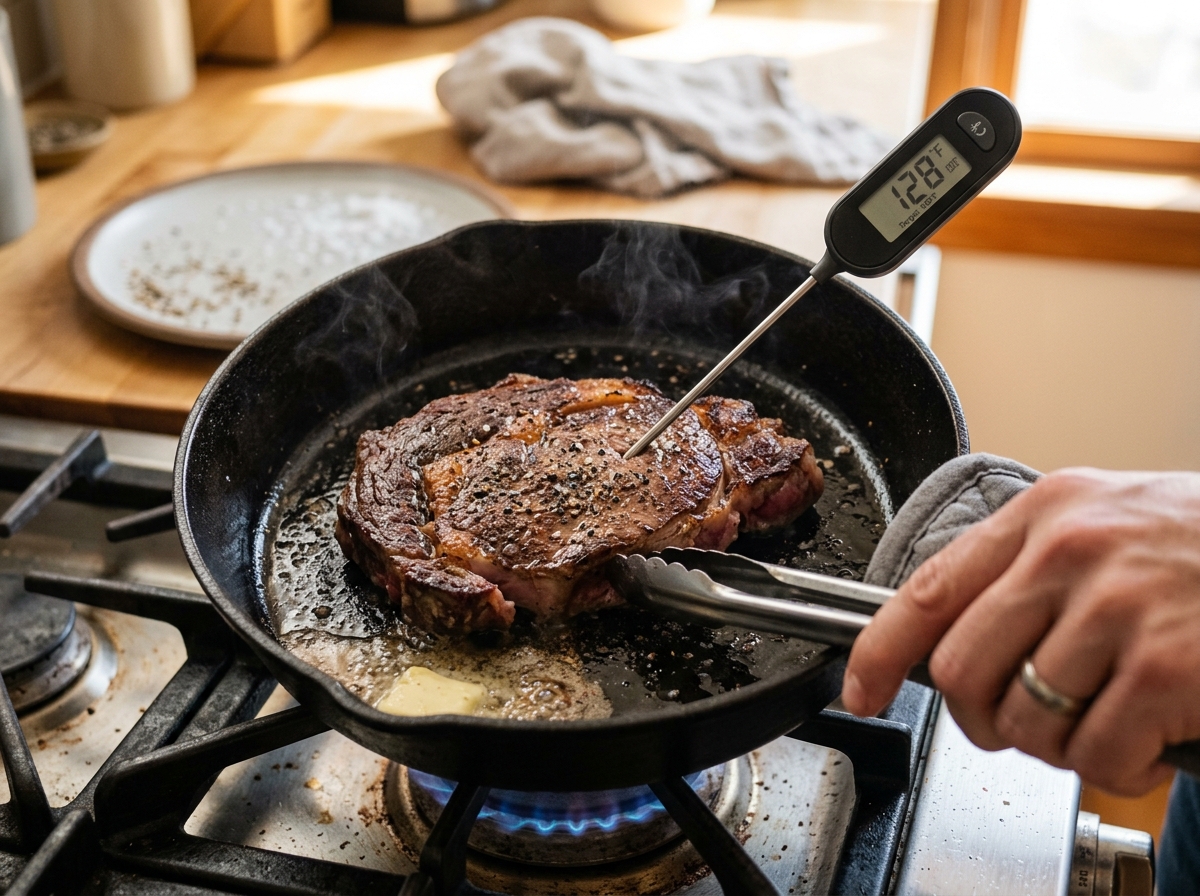
Use your thermometer in the thickest part.
If you want the best texture, pull it from the oven around:
- 105°F to 110°F if you want to keep it closer to medium-rare after searing
- 110°F to 120°F for a more medium finish
- 165°F if you’re following strict leftover safety guidance
4) Sear it fast in a hot skillet
Heat a skillet until it’s very hot. A cast iron skillet is great here, but stainless steel works too.
Add a thin layer of neutral oil, like canola or avocado oil. Sear the steak for 30 to 60 seconds per side. If it has a fat cap, hold it upright for a few seconds too.
You’re not trying to cook it more. You’re rebuilding surface flavor.
5) Rest briefly and serve
Let the steak sit for a minute or two. Then slice and eat.
That short rest helps the surface settle down, especially after the hot pan finish.
Why this method works
A microwave or blazing hot skillet can shock the steak. The outside gets hammered while the center stays cool. The low oven avoids that.
Then the quick sear gives you the part people miss most with leftovers: the browned crust and a little bit of sizzle.
It’s the same reason toast tastes better finished crisp instead of steamed soft in a box.
Real example
Say you have a leftover medium-rare sirloin, about 1 inch thick.
You warm it in a 250°F oven until the center hits 110°F, which may take about 18 minutes. Then you sear it in a hot pan for 45 seconds per side.
You end up with a steak that’s warm in the center, still tender, and not gray all the way through. That’s a much better result than two minutes in a microwave on full blast.
If your steak is already sliced
Sliced steak needs a different approach. It dries out faster because more surface area is exposed.
Put the slices in a baking dish with a spoonful or two of beef broth, stock, or even a little butter. Cover the dish loosely with foil and warm it at 250°F for about 5 to 10 minutes.
You can also warm slices in a skillet over low heat with a splash of liquid. That’s great for steak bowls, fajitas, pasta, or sandwiches.
Did you know? A lot of people over-reheat sliced steak because they treat it like a whole ribeye. It’s more like reheating roast beef. Gentle heat wins.
Other ways to reheat steak
Maybe you don’t want to turn on the oven. Fair enough. Here are the other good options, and when they make sense.
Can you reheat steak in a skillet only?
Yes, and it works well for thin cuts or smaller portions.
Start with the skillet on low to medium-low heat. Add a small splash of broth or water, then cover the pan for a minute or two. That gentle steam helps the center warm.
Once the steak feels nearly warm, uncover the pan, let the extra moisture cook off, add a little oil or butter, and sear each side briefly.
This method is solid for:
- thin sirloin
- strip steak leftovers
- steak tips
- sliced steak for tacos or rice bowls
What you don’t want to do is throw a cold steak into a screaming hot pan and hope for the best. That gives you a dark outside and a cool middle.
Can you reheat steak in an air fryer?
You can, and it’s pretty handy.
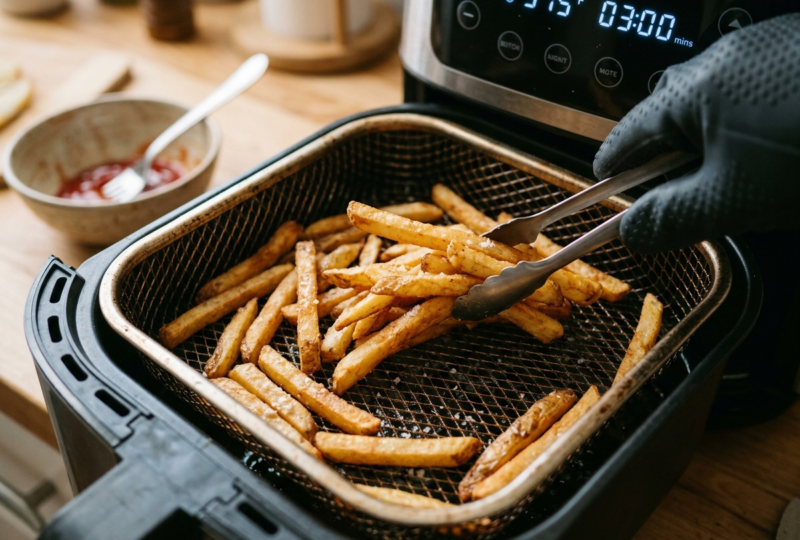
Set the air fryer to 250°F if your model allows it. If not, use the lowest setting close to that. Reheat the steak for about 2 to 4 minutes, flipping once. Check early, especially if the steak is thin.
Air fryers move hot air fast, so they can overcook the edges if you forget about it. They’re best for steaks that are at least moderately thick.
If you want a better crust, you can still finish with a very quick pan sear.
Can you reheat steak in the microwave?
Yes. It’s not the best way, but it doesn’t have to be a disaster.
The trick is simple: use lower power and short bursts.
Put the steak on a microwave-safe plate. Add a tiny bit of butter or a teaspoon of broth. Cover it loosely with a microwave cover or damp paper towel.
Heat it at 30% to 50% power for 20 to 30 seconds at a time. Flip it between bursts. Stop as soon as it’s warm.
That low-power method works because it warms more gently. Full power cooks the outside too fast.
A microwave is fine if the steak is going into:
- scrambled eggs
- a quesadilla
- fried rice
- a grain bowl
- a steak sandwich
If your goal is a perfect medium-rare center and crisp crust, use the oven or skillet instead.
What about sous vide?
If you own a sous vide machine, it’s one of the gentlest ways to warm steak.
Seal the steak in a bag or use a sturdy zip bag with the air pressed out. Warm it in water around 120°F to 130°F until heated through, then sear it quickly in a hot pan.
This works especially well for thicker cuts like ribeye or filet mignon.
It’s not the most common home method, but it gives you very even reheating.
Mistakes that ruin reheated steak
You don’t need chef training to avoid dry steak. You just need to dodge a few common mistakes.
Starting with high heat
This is the biggest one.
People think high heat will get the job done faster. It will. It’ll also overcook the outside before the center warms. Steak doesn’t need a hard blast from the start. It needs patience.
Skipping moisture for sliced steak
Whole steak can handle dry heat better. Sliced steak can’t.
A splash of broth, melted butter, or pan juices helps protect the meat and keeps it from drying out. You don’t need much. Just enough to create a little gentle steam.
Reheating too long
Steak doesn’t announce when it’s done. It just quietly dries out.
If you’ve ever told yourself, “I’ll give it one more minute,” you already know how that story ends.
Check early. Then check again.
Using the microwave on full power
The microwave isn’t the villain. Full power is.
Low power in short bursts can work. Full power turns tender steak into a chewy homework assignment.
Treating every cut the same
A thick ribeye and thin skirt steak should not be reheated the same way.
Thin steaks are better warmed gently and served quickly. Thick steaks have enough mass to survive the oven-and-sear method.
Ignoring storage and safety
A perfectly reheated unsafe steak is still unsafe.
If it sat out too long, smelled off, or has been in the fridge too many days, don’t gamble on it.
Warning: Reheating steak again and again is rough on both safety and texture. Try to warm only the portion you plan to eat.
What to do with steak that shouldn’t be reheated whole
Here’s a tip that many articles miss: not every leftover steak should be eaten as a full steak dinner the next day.
If your steak is thin, already medium-well, or sliced, it may taste better in a different form.
A cold or gently warmed steak can be excellent in:
- a salad with vinaigrette
- tacos or fajitas
- a sandwich with horseradish or mustard
- fried rice
- pasta with mushrooms and butter
That may sound like settling, but it’s actually smart cooking. You’re using the steak where its texture still shines.
Did you know? Cold leftover steak sliced thin across the grain can taste better on a salad than a badly reheated steak tastes on its own.
If you’ve got a skirt steak or flank steak, this matters even more. Those cuts are already lean and can toughen fast. Slice them thin, warm them briefly, and let the dish carry some of the moisture.
4. FAQ Section
FAQ
What is the best way to reheat steak without drying it out?
The best way to reheat steak is to warm it slowly in a 250°F oven until the center is just warm, then sear it in a hot skillet for 30 to 60 seconds per side. This method keeps the inside from drying out and brings back some crust.
Can you reheat medium-rare steak and keep it pink?
Yes, sometimes. Warm it gently and stop early, usually around 105°F to 110°F before a quick sear. That gives you the best shot at keeping a pink center. Even then, the steak may end up a little more done than it was the first time.
How long does leftover steak last in the fridge?
Leftover steak is usually best within 3 to 4 days in the refrigerator, based on USDA guidance for cooked leftovers. Store it in an airtight container and refrigerate it within 2 hours of cooking.
Can you reheat steak from frozen?
You can, but thawing it overnight in the fridge gives you a better result. Reheating from frozen takes longer and can heat unevenly. If you do reheat from frozen, use low oven heat and check the center often.
What internal temperature should reheated steak reach?
For strict food safety, USDA says leftovers should reach 165°F. For better texture, many cooks warm steak less than that, especially if it was stored properly and they want to keep it pink. If you’re serving anyone at higher risk, go with 165°F.
Why does reheated steak get tough?
Reheated steak gets tough because the muscle fibers tighten and lose moisture when exposed to too much heat. That’s why fast, high heat from the start often ruins it. Gentle reheating works better.
5. Conclusion
If you remember one thing, make it this: gentle heat gives you better steak.
The oven-and-skillet method is your safest bet for great texture. The skillet-only method works when you need speed. The microwave can still do a decent job if you keep the power low and the timing short.
Next time you’ve got leftover steak in the fridge, don’t just blast it and hope. Warm it slowly once, use a thermometer if you can, and you’ll taste the difference right away. A reheated steak may not be identical to night one, but it can still be juicy, tender, and fully worth eating.