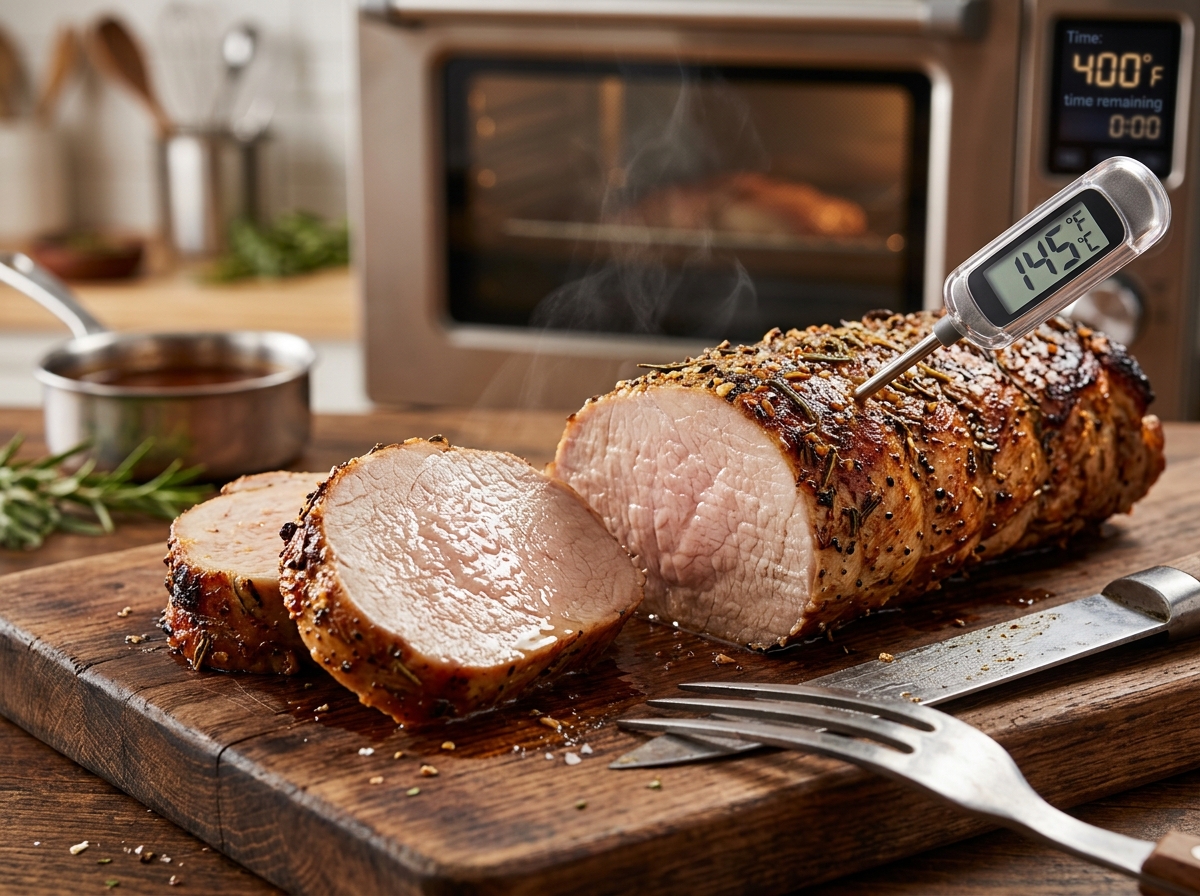
If your pork tenderloin is average size, 1 to 1.5 pounds, roast it at 400°F for about 20 to 27 minutes.
That said, ovens vary. So do tenderloin sizes. One piece may be thick and short, while another may be long and thin. That changes cook time more than people think.
A good rule of thumb looks like this:
- 1 pound pork tenderloin: 18 to 22 minutes
- 1.25 pounds: 22 to 25 minutes
- 1.5 pounds: 24 to 27 minutes
Your best guide is not the clock. It’s a meat thermometer.
The USDA recommends cooking whole pork cuts to 145°F, then letting them rest for at least 3 minutes. At that point, the pork can still be slightly pink in the center, and that’s okay. In fact, that’s often where the best texture lives.
Why time alone can fool you
Let’s say two people both roast pork tenderloin at 400°F for 25 minutes. One gets juicy pork. The other gets dry pork. Why?
Because one tenderloin may be thicker. One oven may run hot. One cook may have started with meat straight from the fridge. Small details change the result.
Think of it like toast. Two slices in two different toasters can come out totally different on the same setting. Pork works the same way.
What People Really Want to Know About Pork Tenderloin Cook Time
Most readers searching this topic aren’t looking for a fancy chef lesson. They want dinner to come out right the first time.
Usually, the real questions behind the search are:
“How long do I cook it so it stays juicy?”
That’s the biggest concern. Pork tenderloin is lean, so it doesn’t have much extra fat to protect it from overcooking.
“What internal temp should pork tenderloin be?”
The safe finished temperature is 145°F. That’s the number that matters most.
“Should I cover it with foil?”
Usually, no. Roasting uncovered helps the outside brown better. You can loosely tent it with foil after cooking while it rests.
“Can pork tenderloin be pink?”
Yes. A little blush pink in the center is normal if it reached 145°F.
“Is pork loin the same thing?”
No, and this confuses a lot of people. Pork tenderloin is a small, narrow, very lean cut. Pork loin is larger, thicker, and takes much longer to cook. Mixing them up is one of the easiest ways to ruin dinner.
That confusion shows up all over recipe forums, home cooking threads, and Q&A sites. People often say, “I followed the timing and it was raw,” or “Mine came out dry.” A lot of the time, they used the wrong cut or skipped the thermometer.
Pork Tenderloin vs Pork Loin: Don’t Mix These Up
This part matters more than it seems.
Pork tenderloin
Pork tenderloin is long, narrow, and usually weighs around 1 to 1.5 pounds. It cooks quickly and works well for weeknight meals.
Pork loin
Pork loin is much bigger and wider. It can weigh several pounds and needs much more oven time.
If you bought a large roast labeled pork loin, don’t use the 20 to 27 minute timing from this article. That timing is for pork tenderloin only.
Easy way to tell the difference
If it looks like a slim tube of meat, it’s probably tenderloin.
If it looks like a thick roast you’d serve for a holiday meal, it’s probably loin.
Simple, right? Still, this mix-up happens all the time in grocery stores and kitchens.
Best Way to Cook Pork Tenderloin at 400°F
You don’t need restaurant-level skill here. You just need a simple method and a little attention near the end.
Step-by-step method
1. Preheat the oven to 400°F
Give your oven time to fully heat. A half-heated oven throws off timing.
2. Trim the silver skin if needed
Some pork tenderloins come with a bit of silver skin, which is a thin, tough membrane on the surface. If you see it, trim it off with a sharp knife. It doesn’t soften much during cooking.
3. Pat it dry
Use paper towels. A dry surface browns better than a wet one.
4. Season well
At minimum, use:
- salt
- black pepper
- garlic powder
- a little oil
You can also add paprika, onion powder, rosemary, thyme, or Dijon mustard. Pork tenderloin takes flavor well, but it doesn’t need a complicated marinade to taste good.
5. Sear it first if you want extra color
This step is optional, but helpful. Heat an oven-safe skillet with a little oil and sear the tenderloin for about 1 to 2 minutes per side before roasting.
Will it still cook fine without searing? Yes.
Will searing give you better crust and flavor? Also yes.
6. Roast until it hits 145°F
Place it in the oven and start checking around the 18-minute mark, especially if it’s on the smaller side.
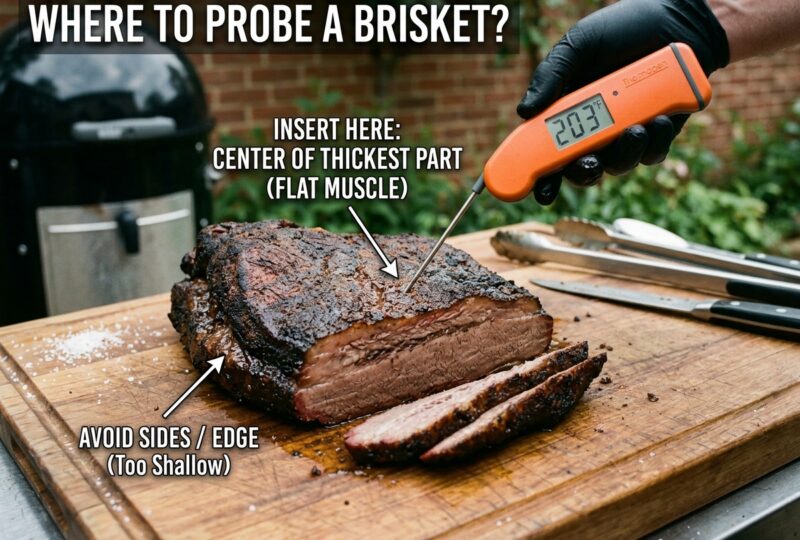
Insert the thermometer into the thickest part.
7. Rest before slicing
Take it out at 145°F, or even 142 to 143°F if you know your roast will carry over a bit. Then let it rest for 5 to 10 minutes.
That resting time keeps the juices from running all over the cutting board.
8. Slice against the grain
This small step makes a big difference in tenderness.
How to Know When Pork Tenderloin Is Done
The biggest mistake people make? Trusting color instead of temperature.
Use a meat thermometer, not guesswork
A pork tenderloin can look done on the outside and still need a few more minutes inside. Or it can look fine, stay in too long, and dry out.
The sweet spot is:
145°F internal temperature + 3 minutes minimum rest
That’s the current USDA guidance for whole-muscle pork cuts like tenderloin.
What the inside should look like
At 145°F, the center may be:
- light pink
- juicy
- firm, but not hard
That pink color doesn’t mean undercooked. Pork standards changed years ago, but many home cooks still think pork must be white all the way through. That old habit leads to overcooking.
Quick fact
Carryover cooking means the meat keeps cooking a bit after you remove it from the oven. The internal temp may rise by a few degrees while it rests.
That’s why pulling it out right at 145°F, or just under, often works best.
Why Pork Tenderloin Dries Out So Easily
Pork tenderloin is one of the leanest cuts of pork. Lean meat cooks fast, but it also has less room for error.
A few extra minutes can push it from juicy to dry.
Common reasons it turns out dry
Cooking by time only
Time helps, but thickness matters more than people think.
Waiting until there’s no pink at all
That usually means it’s already overcooked.
Skipping the rest time
If you slice it right away, the juices escape fast.
Using too high a final temp
Many people still cook pork to 160°F or more out of habit. For tenderloin, that often means tough meat.
Starting with very cold meat
Fridge-cold pork can cook unevenly. Letting it sit at room temperature for about 15 to 20 minutes before roasting can help it cook more evenly. Don’t leave raw meat out too long, though.
Should You Sear, Marinate, or Cover It?
These are some of the most common follow-up questions, and the answer depends on what result you want.
Searing: worth it?
Yes, if you want better browning and richer flavor.
A seared pork tenderloin has more color and a more savory crust. If you’re short on time, you can skip it. The meat will still cook through in the oven.
Marinating: helpful but not required
A marinade can add flavor, especially if you’re using simple sides like rice, potatoes, or roasted vegetables.
Good marinade ingredients include:
- olive oil
- garlic
- soy sauce
- Dijon mustard
- lemon juice
- herbs
- honey or brown sugar in small amounts
Even 30 minutes helps. A few hours is better. Overnight is fine if the marinade isn’t too acidic.
Still, don’t feel like you must marinate. A well-seasoned tenderloin cooked properly already tastes great.
Covering with foil: usually not during roasting
If you cover it while roasting, the pork steams more than roasts. That means less browning.
Use foil after cooking, loosely draped over the meat while it rests.
Exact Cook Time Based on Size and Oven Situation
Let’s make this more practical.
If you’re cooking one standard tenderloin
A typical grocery store pork tenderloin weighs around 1 to 1.25 pounds.
At 400°F, expect about 20 to 25 minutes.
If you’re cooking two tenderloins
If they’re separate pieces and not crowded in the pan, the cook time is often similar, around 22 to 28 minutes.
That surprises people, but it makes sense. You’re cooking two individual pieces, not one giant roast.
If your tenderloin is very thin
A thinner cut may cook in 18 to 20 minutes.
If your tenderloin is thick
A thicker piece may need 26 to 30 minutes.
Warning
Don’t just add extra minutes because “pork should be well done.” That old rule ruins a lot of tenderloin.
Best pan to use for pork tenderloin
You’ve got options:
- oven-safe skillet
- roasting pan
- sheet pan
- baking dish
An oven-safe skillet, like cast iron or stainless steel, works especially well because you can sear and roast in the same pan.
If you use a sheet pan, line it with foil or parchment for easier cleanup.
Flavor ideas that work well with pork tenderloin
Pork tenderloin is pretty flexible. It can go savory, sweet, smoky, or herby.
Simple garlic herb version
Use olive oil, garlic, salt, pepper, rosemary, and thyme.
Sweet-savory version
Try Dijon mustard, honey, garlic, and a little apple cider vinegar.
Smoky version
Use paprika, brown sugar, garlic powder, salt, black pepper, and a touch of chili powder.
Did you know?
Apple, mustard, maple, garlic, rosemary, and sage are classic flavor pairings with pork because they balance its mild taste really well.
What to Serve With Pork Tenderloin
If you’re making this for a weeknight dinner, keep the sides simple.
Good options include roasted potatoes, mashed potatoes, green beans, asparagus, rice, salad, or glazed carrots.
If your seasoning is bold, like smoky paprika or mustard, mild sides work best. If your pork is simply salted and roasted, you can lean more on a flavorful sauce.
A quick pan sauce can help too. After roasting, use the same skillet with a splash of broth, a little mustard, or a spoon of butter. Scrape up the browned bits and simmer for a minute or two. That’s easy flavor.
Common Mistakes That Change Cook Time
These are the small things that throw people off and make them say, “But I followed the recipe.”
Opening the oven too often
Every time you open the door, heat escapes. That can slow cooking and affect browning.
Using the wrong thermometer placement
If the probe touches the pan or goes into a thin end, the reading won’t help you.
Crowding the pan
If you pack the pan too tightly, the meat may steam instead of roast.
Cooking straight from the fridge and expecting exact timing
Cold meat can take a little longer.
Confusing tenderloin with pork loin
Honestly, this is one of the biggest reasons timing advice seems “wrong” online.
Can you cook pork tenderloin from frozen?
You can, but it’s not ideal if your goal is even cooking and a nice roasted outside.
For best results, thaw it in the fridge first. A thawed tenderloin cooks more evenly and seasons better.
If you must cook from frozen, expect a much longer cook time and check the internal temperature carefully. The outside can overcook before the center is ready.
Leftovers, storage, and reheating
Pork tenderloin leftovers can be really good if you reheat them gently.
Store cooked pork in the fridge in an airtight container for up to 3 to 4 days.
To reheat, slice it and warm it with a splash of broth or water in a covered skillet over low heat. You can also use the microwave at lower power in short bursts.
High heat is the enemy here. It turns good leftovers into dry strips fast.
A Real Example So You Can Picture It
Let’s say you bought a 1.25-pound pork tenderloin.
You pat it dry, rub it with olive oil, salt, pepper, garlic powder, and paprika. You sear it in a skillet for 2 minutes per side, then transfer the same skillet to a 400°F oven.
You start checking at 20 minutes. The thermometer reads 138°F. You put it back in.
At 23 minutes, it reads 144°F. You pull it out and rest it for 7 minutes. The temp rises to 146°F.
You slice it, and the center is slightly pink and juicy.
That’s the goal.
Why many top articles miss the mark
A lot of recipe posts give one flat number like “25 minutes at 400” and stop there. That sounds helpful, but it leaves out the part that actually saves dinner: size, thickness, and internal temperature.
Many articles also don’t clearly explain the difference between pork tenderloin and pork loin. That’s a major gap because searchers often confuse the two.
Another thing often missing is the realistic kitchen context. People aren’t just asking for a number. They’re asking things like:
- Why did mine come out dry?
- Why is it pink?
- Do I need foil?
- Can I cook two at once?
- Should I sear it first?
Those are the questions that actually matter once you’re standing in the kitchen with raw pork and 30 minutes before dinner.
Pro Tips for Better Pork Tenderloin at 400
A few small habits can make your results a lot more reliable.
Pro Tip: Season the pork a little ahead of time if you can. Even 20 to 30 minutes helps the salt work into the surface.
Pro Tip: Use an instant-read thermometer, not just oven timing.
Pro Tip: Start checking early. It’s much easier to cook 2 more minutes than to undo overcooking.
Pro Tip: Let it rest before slicing, even if everyone is hungry and hovering around the counter.
Pro Tip: Slice only what you need if you’re saving leftovers. A whole piece stays juicier than pre-sliced leftovers.
FAQ Section
How long does it take to cook pork tenderloin in the oven at 400 degrees?
Most pork tenderloin takes about 20 to 27 minutes at 400°F. The exact time depends on the size and thickness. The safest way to know it’s done is to check for an internal temperature of 145°F.
Is pork tenderloin done at 400 when it’s still pink?
Yes, it can be. Pork tenderloin may be slightly pink in the center and still be fully cooked, as long as the internal temperature reaches 145°F and it rests for at least 3 minutes.
Should I cover pork tenderloin with foil in the oven?
Usually, no. Roast it uncovered so the outside browns well. After cooking, you can loosely tent it with foil while it rests.
Do I need to sear pork tenderloin before baking?
You don’t need to, but it helps. Searing adds color and flavor to the outside. If you’re short on time, you can skip it and roast the tenderloin directly in the oven.
What’s the difference between pork loin and pork tenderloin?
Pork tenderloin is a small, lean, quick-cooking cut. Pork loin is much larger and takes longer to roast. They are not the same cut, and they should not use the same cook time.
How long should pork tenderloin rest after cooking?
Let it rest for 5 to 10 minutes before slicing. That helps the juices stay in the meat instead of spilling out onto the cutting board.
Conclusion
If you remember just one thing, make it this: pork tenderloin at 400°F usually takes 20 to 27 minutes, but 145°F internal temperature is the real finish line.
That one habit changes everything. You stop guessing. You stop overcooking. And you get pork that’s tender, juicy, and actually worth making again.
So next time you pull a pork tenderloin from the fridge, don’t stress about finding the perfect magic minute. Preheat the oven, keep your thermometer close, and let the temperature tell you when dinner’s ready.